
Postpartum Back Pain: Causes and Relief in Colleyville, TX
Gentle, evaluation-first chiropractic care for new moms with back pain after delivery in Colleyville, TX, guided by CLA INSiGHT scans.
❖ Personalized, One-on-One Care
❖ Cash-Based, No Insurance Required
❖ Webster Certified
❖ CLA INSiGHT Technology
Why Your Back Hurts After Having a Baby
Quick Summary: Postpartum back pain usually comes from two things at once: the changes your body went through in pregnancy, and the lifting, bending and feeding that come with a newborn. Ligaments can take months to settle after delivery. Better feeding and lifting habits, gradual strengthening and gentle care help most moms feel like themselves again.
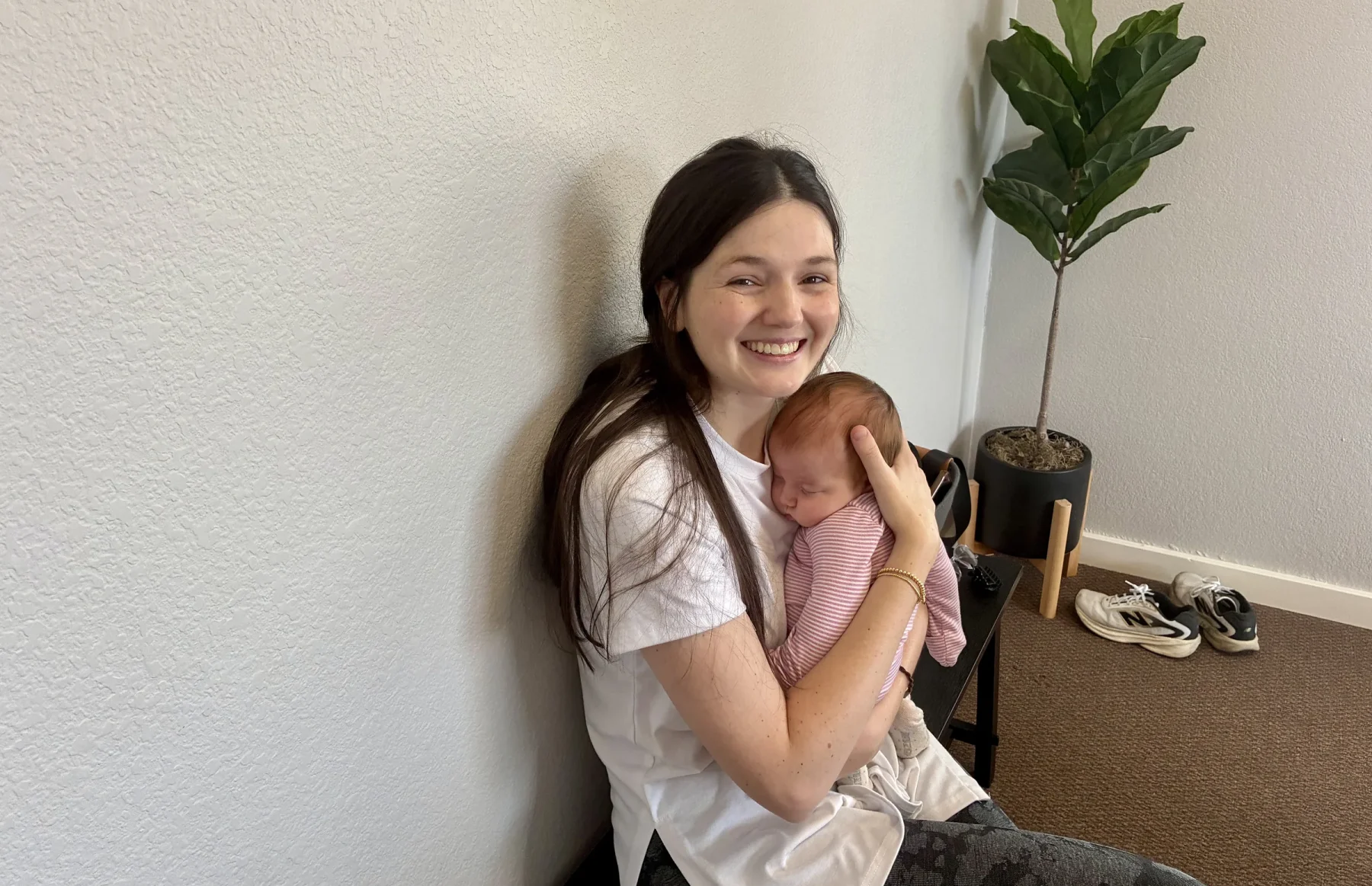
Back pain after delivery usually has more than one cause. The NHS guide to your body after pregnancy notes that physical problems after having a baby can be related to pregnancy or birth, or to the things you do while caring for young children, such as lifting and bending.
Pregnancy sets the stage. Cleveland Clinic’s page on back pain during pregnancy explains that ligaments become softer and more flexible, which can strain the lower back, pelvis and hips, and that the abdominal muscles stretch and weaken, which can lead to poor posture and extra strain on the back muscles. Those changes don’t reverse overnight. A postnatal guide from Plymouth Hospitals NHS Trust notes that ligament changes from pregnancy can take many months to return to normal.
Then come the newborn months, with their own sources of strain:
- Curling over the baby during feeds, many times a day and night
- Lifting and carrying an infant car seat
- Bending over a low changing table, crib or bath
- Carrying the baby, or an older sibling, on one hip
- Dozing upright in a chair or in an awkward position between feeds
Some moms also notice a gap between the abdominal muscles, called diastasis recti. Cleveland Clinic notes that you may not see signs of it until several weeks after the baby is born, and the NHS advises standing tall and being aware of your posture as part of recovery.
Daily Habits That Ease Postpartum Back Pain
Small changes, repeated through the day, take load off your back:
- Sit upright to feed with your back supported, and use a pillow to bring the baby up to you. A postnatal guide from Plymouth Hospitals NHS Trust advises not slouching when sitting, standing or feeding your baby.
- Change diapers on a surface at about waist height so you aren’t bending low over and over.
- Hold the car seat close to your body, or carry the baby and the seat separately when you can.
- Switch sides when you carry the baby. The same Plymouth guide advises against carrying a toddler on one hip for long periods.
- Roll onto your side and push up with your arms when you get out of bed, as Cleveland Clinic suggests for the early weeks.
- For the first six weeks, Cleveland Clinic suggests not lifting anything heavier than your baby.
Movement helps too. ACOG’s guide to exercise after pregnancy says that if you had a healthy pregnancy and a vaginal delivery, you should be able to start exercising again soon after the baby is born, beginning with simple exercises that strengthen major muscle groups, including the abdominal and back muscles. The NHS suggests avoiding sit-ups, planks and high-impact exercise to start with. After a C-section, follow your OB’s guidance on when to begin. Even a stroller walk counts, whether that is around your neighborhood or laps inside North East Mall on a cold day.
How We Help New Moms
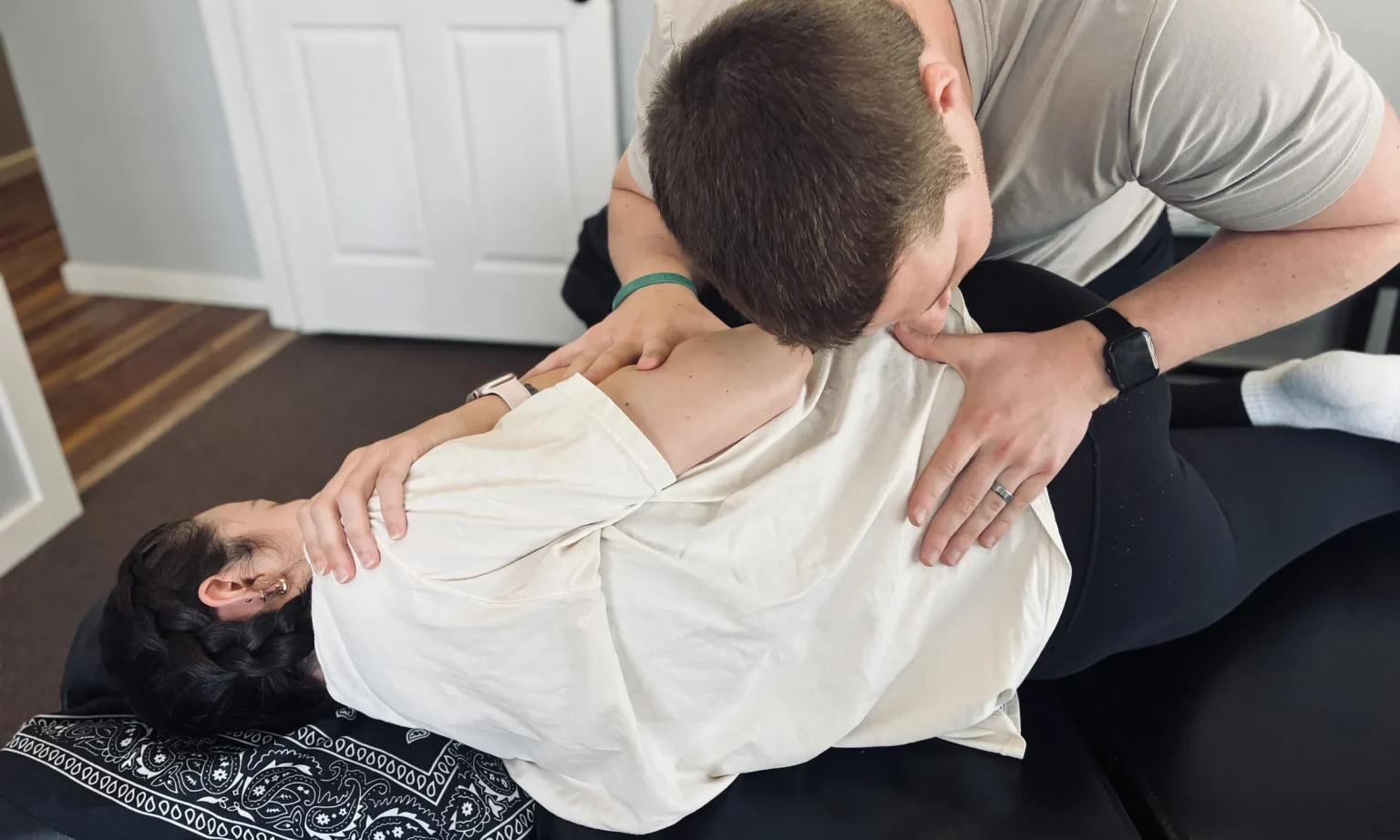
When home changes aren’t enough, a chiropractic visit looks at the whole picture. At our chiropractic office in Colleyville, Dr. Williams takes a history of your pregnancy, delivery and recovery, then gently checks how your lower back, pelvis and upper back are moving. A CLA INSiGHT scan shows where muscle tension and nervous system stress are concentrated along the spine. Care pairs gentle adjustments, positioned for comfort after delivery, with feeding, lifting and posture habits you can use at home.
If you saw us while you were expecting, postpartum visits pick up where your Webster-certified prenatal care left off. If your pain started before delivery, the same ligament and posture changes behind back pain while you were pregnant and pelvic and hip pain in pregnancy can carry over after the birth.
Families come to us from Southlake, and we also welcome new moms in North Richland Hills.
When to Call Your Doctor First
Some symptoms after delivery need medical care right away, not a chiropractic visit. The CDC’s Hear Her campaign lists urgent maternal warning signs, including:
- A severe headache that won’t go away or gets worse over time
- Dizziness or fainting
- Changes in your vision
- A fever of 100.4°F or higher
- Trouble breathing, chest pain or a fast-beating heart
- Severe belly pain that doesn’t go away
- Heavy vaginal bleeding or leaking fluid
- Swelling, redness or pain in your leg
- Thoughts about harming yourself or your baby
Get medical care immediately if you have any of these, and call or text 988 if you are having thoughts of harming yourself. Cleveland Clinic also notes that back pain with a fever or pain when you urinate can signal a urinary tract infection, and that back pain severe enough to stop normal daily activities, or pain that starts suddenly and sharply, should be checked. Get emergency care for leg weakness or loss of bladder or bowel control.
Frequently Asked Questions
How long does postpartum back pain last?
It varies from mom to mom. A postnatal guide from Plymouth Hospitals NHS Trust notes that ligament changes from pregnancy can take many months to return to normal, and it recommends seeing a physiotherapist if back or pelvic pain persists. If pain is severe, getting worse or still affecting daily life, talk with your OB.
Why does my back hurt when I breastfeed?
Feeding often means sitting for long stretches curled toward the baby. Plymouth Hospitals NHS Trust advises keeping your back upright and not slouching while feeding. A supportive chair, a pillow to bring the baby up to you and switching sides and positions can all take strain off your back.
Can I exercise with postpartum back pain?
Usually, yes, starting gently. ACOG says that after a healthy pregnancy and a vaginal delivery you can start exercising soon after the baby is born, beginning with simple exercises for the abdominal and back muscles. The NHS suggests avoiding sit-ups, planks and high-impact exercise at first. After a C-section, ask your OB when to start.
When can I lift my toddler after a C-section?
A postnatal guide from Worcestershire Acute Hospitals NHS Trust advises lifting only your baby’s weight for the first 6 weeks after a C-section. Ask your OB when heavier lifting is OK for you, and in the meantime let your toddler climb up to you rather than lifting them from the floor.
Is chiropractic care safe after giving birth?
Chiropractic care after delivery is gentle and adapted to where you are in your recovery. We recommend checking in with your OB first, especially after a C-section, and we position you for comfort and work around any healing. If anything in the exam points somewhere else, we will tell you and refer you.

Schedule Now
Looking for a family chiropractor in Colleyville, TX? At Radiant Chiropractic, every care plan starts with a real assessment, not a guess. Schedule your first visit and see what’s actually going on.
What Colleyville Families Are Saying
Real feedback from the families we’ve had the privilege to care for


 Trustindex verifies that the original source of the review is Google.
 Trustindex verifies that the original source of the review is Google.

 Trustindex verifies that the original source of the review is Google.
 Trustindex verifies that the original source of the review is Google.
 Trustindex verifies that the original source of the review is Google.
 Trustindex verifies that the original source of the review is Google.
 Trustindex verifies that the original source of the review is Google.
 Trustindex verifies that the original source of the review is Google.

 Trustindex verifies that the original source of the review is Google.
 Trustindex verifies that the original source of the review is Google.
Visit Our Office
Contact us for expert chiropractic care in Colleyville, TX.
PHONE - Call or Text 📱
HOURS
Monday: 9:00am–1:00pm, 4:00pm–7:00pm
Tuesday: 4:00pm–7:00pm
Wednesday: 9:00am–1:00pm, 4:00pm–7:00pm
Thursday: 9:00am–1:00pm, 4:00pm–7:00pm
Friday: Closed
Saturday: Closed
Sunday: Closed