Scoliosis Signs, Causes & Evaluation in Colleyville, TX
Objective scoliosis screening and monitoring for kids and adults in Colleyville, TX, guided by CLA INSiGHT scans, not guesswork.
❖ Personalized, One-on-One Care
❖ Cash-Based, No Insurance Required
❖ Webster Certified
❖ CLA Insight Technology
What Is Scoliosis
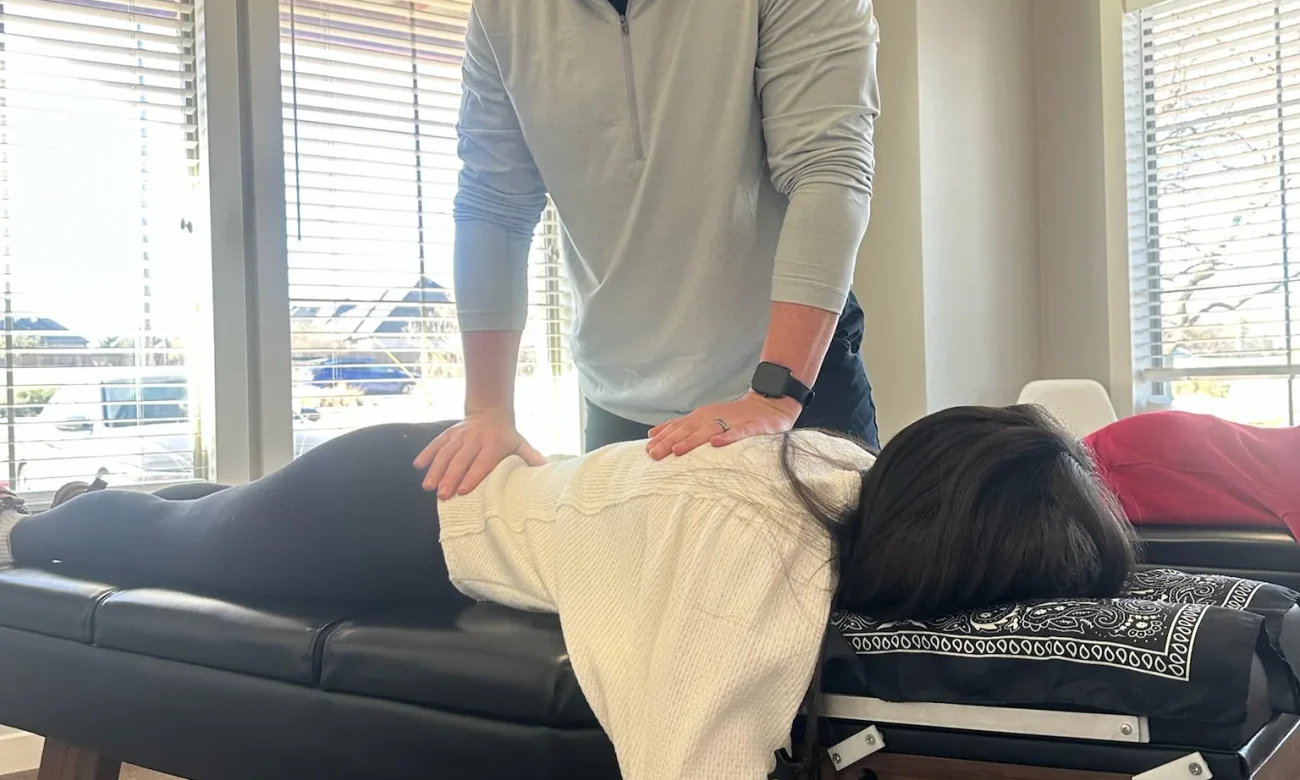
Scoliosis is a sideways curve of the spine, usually shaped like an S or a C instead of running straight. Most cases show up in kids between ages 10 and 15, often with no single clear cause. Catching it early makes a real difference: a curve caught young is far easier to manage than one that’s had years to progress.
Scoliosis isn’t just bad posture. A lot of parents in Colleyville tell us they assumed their kid was just slouching, until a school screening or a sharp-eyed pediatrician flagged something more. Scoliosis is a structural curve in the spine, measured in degrees on an X-ray. According to the Scoliosis Research Society, a straight spine measures 0 degrees, and any curve greater than 10 degrees is what actually counts as scoliosis. Anything smaller is normal variation.
There are a few different types, and they don’t all come from the same place. Idiopathic scoliosis is the most common kind in kids, and doctors still don’t fully know why it happens. It tends to run in families and shows up most during growth spurts. Congenital scoliosis is present at birth, caused by bones that didn’t form the right way in the womb. Neuromuscular scoliosis develops alongside conditions like cerebral palsy, where muscles can’t support the spine evenly.
Here’s the thing about scoliosis that surprises most parents: it usually doesn’t hurt, at least not early on. That’s exactly why it sneaks up on families. A mom might not notice anything until she’s helping her daughter try on a swimsuit and sees one hip riding higher than the other. That moment is more common than you’d think.
We use CLA INSiGHT scans in our office to get a clear picture of how the spine is functioning, not just how it looks on an X-ray. This helps us understand nerve activity along the spine, muscle tension patterns, and how a curve might be affecting a child day to day. It’s a different piece of the puzzle than an X-ray alone gives you.
The severity range matters a lot here. Mild curves, roughly 10 to 25 degrees, often just need watching. Moderate curves, 25 to 40 degrees, need more active management and regular monitoring. Curves above 40 degrees are considered severe, and that’s usually when a family gets referred for a surgical consult with an orthopedic specialist. Knowing where your child’s curve falls changes everything about what happens next.
Signs That Are Worth a Closer Look
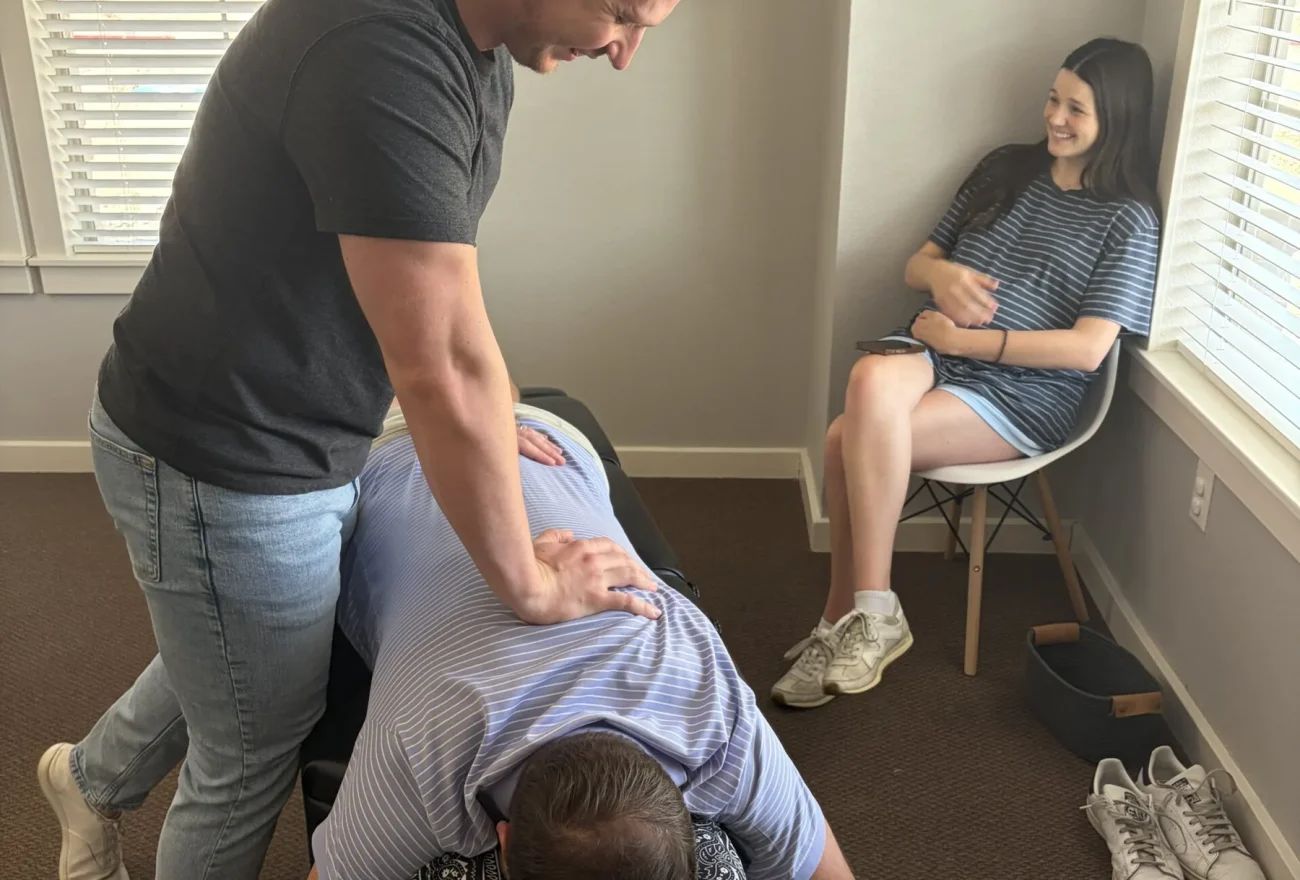
Most scoliosis curves don’t show up as pain. They show up as small shifts you’d only catch if you know where to look. Parents usually spot it during a swim day, a school physical, or when helping a kid try on a new backpack. So what should catch your attention?
We tell parents to think about symmetry, not straightness. A spine with scoliosis curves sideways, and that curve pulls the shoulders, ribs, and hips out of alignment with each other. It’s subtle at first. That’s exactly why it gets missed for months, sometimes longer.
- One shoulder sits higher than the other, even slightly
- One shoulder blade sticks out more than the other when the arms hang down
- The waist looks uneven, or one hip seems higher
- Clothes hang crooked even when they’re the right size
- When the child bends forward to touch their toes, one side of the back rises higher than the other
That last one, the forward bend test, is close to what Cleveland Clinic describes for scoliosis screening: bending forward while a provider looks for one side of the back sitting higher than the other, alongside uneven shoulders, shoulder blades, or hips. We still use a version of it in our office because it’s simple and it works.
A dad we worked with noticed it first on a family beach trip, not at home. His daughter’s swimsuit strap kept slipping off one shoulder no matter how he adjusted it. That’s not a wardrobe problem. That’s a shoulder height difference worth a second look.
Growth spurts matter here too. Curves tend to progress fastest during rapid growth, so kids between roughly ages 10 and 15 need extra attention. But younger kids can show early signs as well, and we’ve caught curves in kids as young as seven or eight during a routine visit.
We also watch how a child moves, not just how they stand still. Does one arm swing differently when they walk? Do they lean to one side without noticing? Little things like that add up.
Here’s the honest truth: most mild curves don’t hurt at all, and that’s the tricky part. Families come to us from North Richland Hills and Southlake after a school screening flagged something, and just as often after a parent’s gut feeling turned out to be right. We use a posture and spine check, sometimes paired with a CLA INSiGHT scan, to get an actual measurement instead of guessing from across the room.
Scoliosis in Children Versus Adults
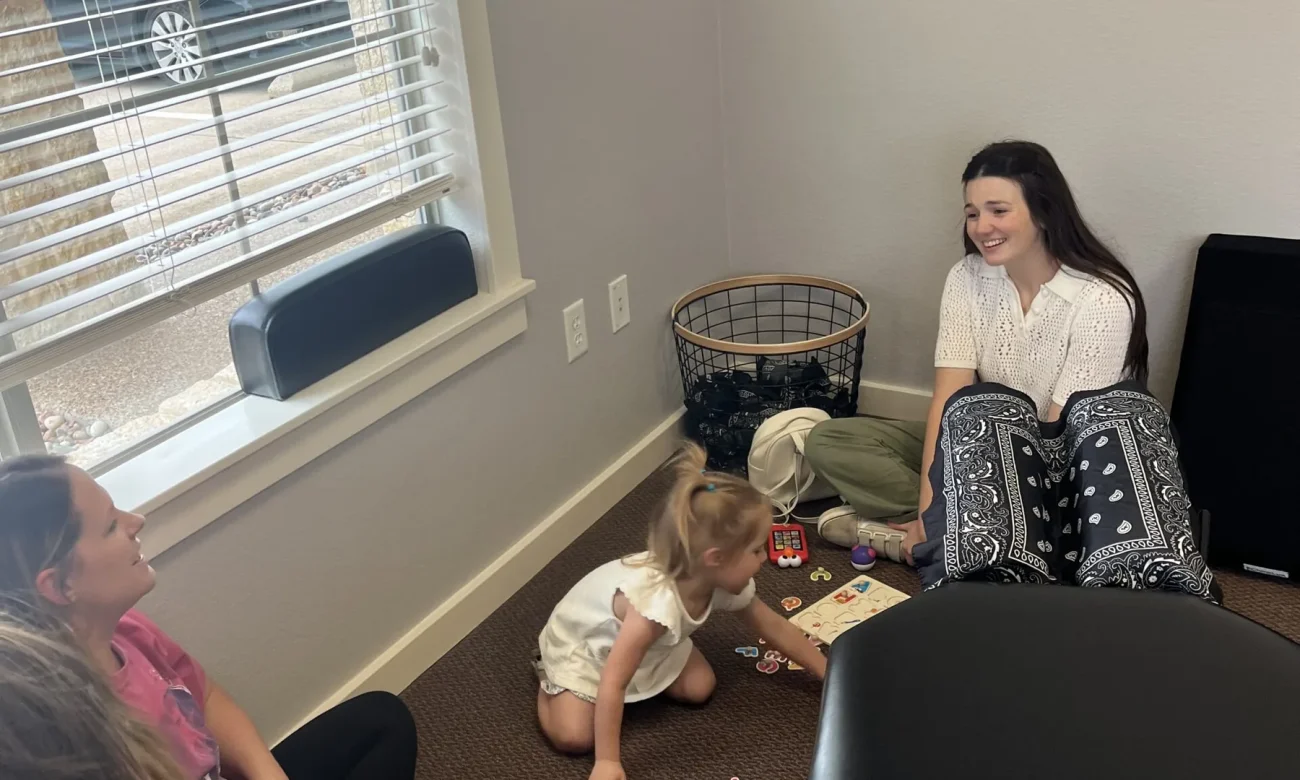
A curve in a 10 year old’s spine and a curve in a 45 year old’s spine are not the same problem, even if the x-ray looks similar. We see this mistake all the time: parents assume scoliosis is scoliosis. But the age it shows up changes almost everything about how it behaves.
Kids are still growing. That’s the whole issue. A curve in a growing spine can change fast, sometimes within a few months, because bone and cartilage are still soft and shifting. So the window to catch it early matters. A mom brought her daughter in last year after a school screening flagged a mild curve. We tracked it with regular check-ins through the rest of her growth spurt, and because we caught it early, the curve stayed manageable.
Adult scoliosis is a different animal. Most adult cases fall into two buckets.
- A curve that started in childhood or the teen years and never got picked up, then shows up later as back pain or posture changes
- A curve that develops in adulthood from disc wear, muscle imbalance, or years of one-sided strain, like a dad who sits at a desk all day and always leans the same way
Adult curves usually don’t progress as fast as a kid’s growing spine. But they come with more pain, more stiffness, and more compensations built up over years. That tracks with what OrthoInfo, published by the American Academy of Orthopaedic Surgeons, has found: curves under 30 degrees carry roughly the same back-pain risk as no curve at all, while larger, untreated curves are more likely to become painful over time.
Here’s the part parents ask about a lot: does treatment differ by age? Yes, quite a bit. With kids, the goal is watching growth and catching progression before it becomes structural. With adults, we’re usually addressing pain, mobility, and function that’s already been affected by the curve for years.
A family that just moved to the area sometimes has no idea their child was ever screened for scoliosis at their old school, since not every district screens the same way. If you’re not sure, ask us. We use CLA INSiGHT scans to get a clear, specific picture of spinal alignment for kids and adults alike, so you’re not guessing based on posture alone.
So which one is your family dealing with: a growing spine you need to track closely, or years of compensation that need attention now? Both deserve a real look, not a guess.
Frequently Asked Questions
Is scoliosis considered a disability in Texas?
Most mild to moderate scoliosis cases are not considered a disability. What matters most is how much the curve limits daily function, not just the diagnosis itself. Severe, uncorrected curves can sometimes qualify for benefits or accommodations, but that depends on individual circumstances. If you have specific legal or benefits questions, check with the relevant state agency directly for accurate guidance.
What organ is most affected by scoliosis?
The lungs are most affected, but only in more severe, uncorrected curves. A large curve can reduce space in the chest cavity, making it harder to breathe deeply over time. Most mild cases, which make up the majority of scoliosis diagnoses, don’t involve any organ impact at all. That’s one more reason a measured evaluation matters more than guessing based on how a curve looks.
What is the newest treatment for scoliosis?
There isn’t one single new treatment that replaces the basics: monitoring, bracing, or surgery, depending on curve severity. What’s changed is how curves get measured and tracked over time, giving families clearer information sooner. The right approach for your child or yourself depends on your specific curve, not a trend. A professional evaluation is still the only way to know which option fits your case.
Can scoliosis be corrected without surgery?
Yes, many cases are managed through monitoring or bracing instead of surgery. This is especially true when a curve is caught early, while a child is still growing. Mild curves often just need regular check-ins to watch for changes. Moderate curves may need bracing to keep them from progressing further. Surgery is usually reserved for curves that reach a more severe range.
Does scoliosis get worse over time?
Sometimes, but it depends on the person and their growth stage. Curves in growing kids and teens can change faster, sometimes within months, which is why timing matters so much. Adult curves usually progress more slowly but can still shift over years. This is why a one-time look isn’t enough. Periodic professional checks catch changes that a quick glance at home would miss.
Schedule Now
Looking for a family chiropractor in Colleyville, TX? At Radiant Chiropractic, every care plan starts with a real assessment, not a guess. Schedule your first visit and see what’s actually going on.
On This Page
- 01What Scoliosis Is
- 02Signs That Are Worth a Closer Look
- 03Scoliosis in Children Versus Adults
- 04FAQ
What Colleyville Families Are Saying
Real feedback from the families we’ve had the privilege to care for
Posted on Google
 Julz Johnson3 days ago
Trustindex verifies that the original source of the review is Google.
Dr. Cameron did an amazing job with my adjustment!Posted on Google Ehod Alsultan30 days agoDr. Cameron was wonderful like a angel sent from above I came in with all the accent pains limping hurting my back is been hurting for years. I go in there and he adjust my back and he works his magic and guess what I walk out of there feeling great thank you so much for fixing me.Posted on Google
 Logan Vise52 days agoDr. Cameron is the absolute best! Honest, fair, and transparent. Highly recommended!!Posted on Google
 John Marsh67 days agoDr. Cameron is amazingly caring in addition to be highly skilled and extremely thorough. He is a true master of his craft. In my experience, finding someone doing what they love WHILE doing it with a high degree of skill is a unique and refreshing combination.+2Posted on Google
 Kimberly Florez81 days agoMe and my family absolutely love Cameron hes amazing and have never found a chiropractor who has helped me like he has definitely make a appointment with him if you havent already!!!!Posted on Google
 Chris B111 days agoWorking with Dr. Cameron has been great. He’s very thorough in diagnosing and explaining what’s causing my back issues. The appointments are efficient, and I always feel better after. Plus, he gave me exercises/stretches to work on at home so it’s a holistic approach to help with longer term prevention of problems. I would definitely recommend him.Posted on Google
 Brian Cox131 days agoDr. Cameron is an amazing chiropractor who focuses on the issues and creates a plan to adjust the issues to sustainable living. Went from migraine/tension headaches daily to having nothing for past 2 weeks. I had an accident that put me out of alignment, yet Dr. Cameron has taken the time to assess and progress with each area and issue. Has alleviated numbness in my fingers from my wrist issue and recovering a majority of the lost flexibility in my neck. Posture is improving and the tension I carried between my shoulder blades to the base of my neck is relieved.Posted on Google
 Matthew McCormack133 days agoI've had a great experience with Dr. Cameron over the past several months. From the moment you walk into the office, you can tell he genuinely cares about his patients and takes time to listen and provide thoughtful care. I’ve appreciated his professionalism, consistency, and the welcoming environment he and his team create. It’s clear he is passionate about helping people feel their best, and that shows in every interaction. Highly recommend to anyone looking for a chiropractor who is knowledgeable, kind, and truly invested in the people he serves!Posted on Google
 Ricardo Flores150 days agoDr. Cameron is attentive and thorough! Felt great after his adjustment and got a lot of relief. Would recommend anyone go here!Posted on Google
 Tyler Dorshorst151 days agoDr. Cameron was incredibly knowledgeable, caring, and made me feel comfortable from start to finish. Great experience, beautiful office, and I left with hope!Verified by TrustindexTrustindex verified badge is the Universal Symbol of Trust. Only the greatest companies can get the verified badge who has a review score above 4.5, based on customer reviews over the past 12 months. Read more


Visit Our Office
Contact us for expert chiropractic care in Colleyville, TX.
PHONE - Call or Text 📱
HOURS
Monday: 9:00am–1:00pm, 4:00pm–7:00pm
Tuesday: 4:00pm–7:00pm
Wednesday: 9:00am–1:00pm, 4:00pm–7:00pm
Thursday: 9:00am–1:00pm, 4:00pm–7:00pm
Friday: Closed
Saturday: Closed
Sunday: Closed