
Digestive Discomfort Causes & Relief in Colleyville, TX
Nervous-system-informed care for digestive discomfort in kids and adults in Colleyville, TX, guided by CLA INSiGHT scans, not guesswork.
❖ Personalized, One-on-One Care
❖ Cash-Based, No Insurance Required
❖ Webster Certified
❖ CLA Insight Technology

Digestive discomfort in babies and kids usually comes from one of a few places: nervous system stress from birth, tight muscles around the belly, or tension in the spine that affects how the gut works. In infants, a hard or fast delivery can leave the upper neck and mid-back tight, which can affect the nerves that talk to the stomach and intestines. In older kids, posture from hunching over tablets or backpacks can do something similar over time.
Let’s talk about why this happens, because most parents have never heard this explained before. Your child’s digestive system doesn’t run entirely on its own. Harvard Health explains that the gut has its own nervous system, with roughly 100 million nerve cells helping control digestion, and that the balance between the body’s “fight or flight” and “rest and digest” signals affects how quickly food moves through the system and how well it’s absorbed. If there’s tension or restriction along the nerve pathways that carry those signals, especially around the upper neck and mid-back, the communication between brain and gut can get a little static-y. That’s not us being dramatic. It’s just how the nervous system works.
We see this a lot with newborns who had a tough delivery. A long labor, a fast delivery, or a birth that needed some assistance can put real strain on a baby’s tiny spine and skull. That strain doesn’t always show up as an obvious injury. But it can show up as fussiness after feeds, gas, or a baby who arches and squirms like something’s uncomfortable.
- Birth trauma or a difficult delivery that left tension in the baby’s upper neck and skull
- Tight diaphragm or rib muscles from how the baby was positioned in the womb
- Tongue or jaw tension that leads to swallowing air during feeds
- Spinal restrictions in older kids from slouched posture, sports injuries, or carrying a heavy backpack
- Stress and tension patterns that build up in growing kids just like they do in adults
For toddlers and school-age kids, it’s a bit different. A fall off a bike, a rough tumble during soccer at a Colleyville park, or just months of sitting hunched over a tablet can all add tension to the spine. And that tension can quietly affect digestion without anyone connecting the dots.
We often see this with older kids after a fall during gymnastics, a tumbling class, or a hard hit during a game, something that seemed minor at the time but left tension in the mid-back that nobody connected to stomach troubles until much later.
A CLA Insight scan is how we find the cause instead of guessing. It’s a non-invasive way to look at nervous system stress along the spine, so we’re not just poking around hoping to find something. For infants specifically, we also check for tension using the Webster Technique approach, which looks at how the pelvis and lower spine may be affecting things like digestion and comfort.
Every family we see is different, of course, but the pattern is usually the same. Something physical is putting stress on the nervous system, and the gut is the part of the body showing it.
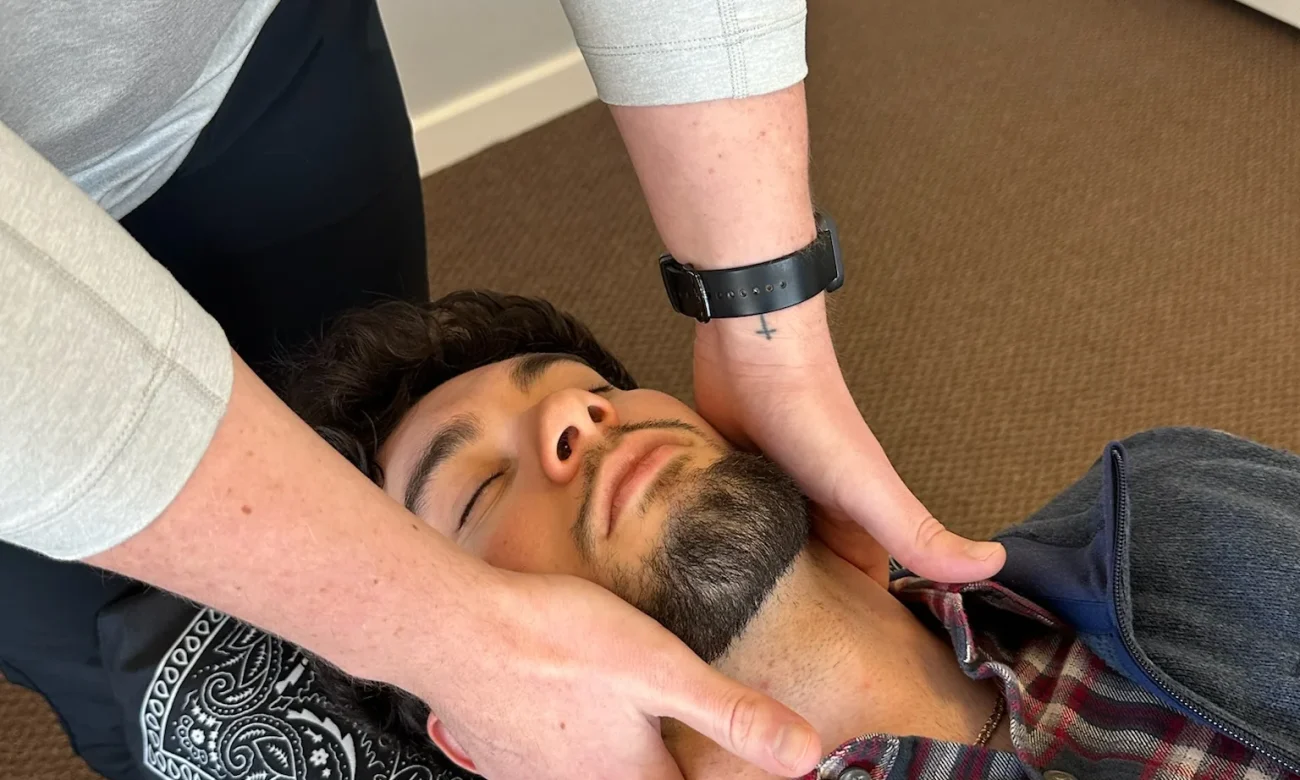
Stress does strange things to your gut. We hear it all the time from parents in Colleyville: the kids are fine, but mom or dad is dealing with a knotted stomach, bloating, or that heavy feeling after meals. Your digestive system and your nervous system are wired together. Cleveland Clinic explains that when your body shifts into fight-or-flight mode, it slows digestion down and redirects that energy toward whatever feels urgent instead, even if the urgent thing is just a packed school pickup schedule and a work deadline.
Think about a mom commuting across DFW every day, dropping kids at school in Colleyville, then sitting in traffic to get to an office in Southlake or Fort Worth. That kind of daily grind keeps the body in a low-grade stress state. Over weeks and months, that adds up. Digestive discomfort isn’t always about what you ate last night. Sometimes it’s about how your body has been running on tension for way too long.
Daily habits play a big role too, and they’re often easier to fix than people expect.
- Eating fast in the car between drop-offs and errands
- Sitting for long stretches at a desk or in traffic
- Skipping meals, then overeating later in the day
- Poor sleep from late nights with a newborn or a busy household
- Holding tension in the shoulders and low back without realizing it
That last item is easy to overlook. Posture and tension aren’t just back problems. A tight, restricted spine and rib cage can limit how well your diaphragm moves, and that affects digestion more than most people realize.
Here’s a scenario we see often. A dad who sits at a desk all day starts noticing bloating and discomfort after dinner. He assumes it’s food related, so he changes his diet, cuts out this or that, and still feels off. But the real issue might be hours of slouched sitting that’s putting pressure on his midsection and limiting normal nerve function to the gut.
This is where a lot of families are surprised to learn chiropractic care connects to digestion at all.
A few things actually help. Slowing down at meals matters more than people think. So does moving your body throughout the day instead of sitting for hours straight. And so does addressing spinal alignment issues that limit normal nerve communication between your brain and your digestive organs.
We’re not saying stress management alone fixes everything. But ignoring it while only looking at food is missing half the picture. If you’ve tried adjusting your diet and you’re still dealing with digestive discomfort, it might be time to look at what your body is doing under pressure, not just what’s on your plate.
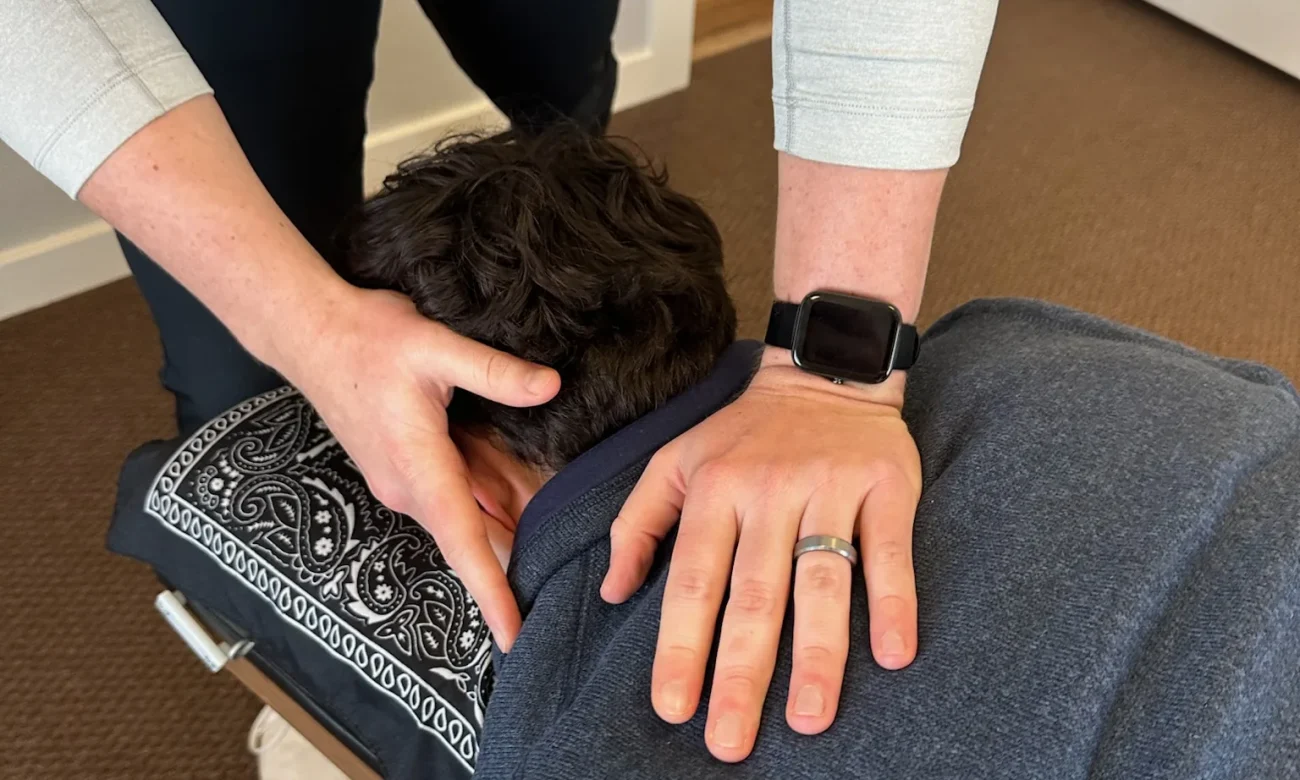
Here’s something we tell every parent who walks into our Colleyville office worried about their child’s stomach aches: one bad day tells you almost nothing. Digestive discomfort that shows up once after a birthday party pizza binge is just a Tuesday. But a pattern? That’s information. Stomach pain that keeps showing up on the same kind of day, like every Monday after a packed weekend, or every time practice runs late, isn’t random. That’s a clue.
Most parents track symptoms in their head, and that rarely works. You remember the dramatic episodes, not the quiet, boring ones that build the full picture. We ask families to write things down for two weeks before we even start talking about a treatment plan.
- Time of day the discomfort started and how long it lasted
- What was eaten in the hour or two before symptoms showed up
- Whether the child was stressed, tired, or had a rough sleep the night before
- Any physical position that made it feel better or worse
- Whether it happened around a specific activity, like right after school pickup or during a car ride
After two weeks, most parents can already see something they missed before. Maybe it’s always after dairy. Maybe it’s always on days with a packed schedule and no lunch break. Maybe it lines up with sitting hunched over a tablet for an hour straight. And that last one comes up more than you’d think.
HealthyChildren.org, published by the American Academy of Pediatrics, recommends keeping a journal to track which foods and situations line up with a child’s pain. That kind of written pattern is often what points a provider toward the real cause faster than guessing ever could.
We use CLA Insight scans in our office to look at nervous system stress patterns that often connect to gut function, since the nerves running through the spine influence digestion more than most people realize. But even before a family gets to that step, the log they’ve kept at home tells us where to focus first.
By the end of two weeks, most families either have a clear answer or a much shorter list of possibilities than when they started.
A log that shows symptoms clustering around the first week of school and easing up by the weekend points to a stress pattern, not a food allergy, and that distinction changes where care starts. Without that kind of tracking, it’s much harder to tell the two apart.
Is digestive discomfort after eating always something to worry about?
No, occasional discomfort after a big or rich meal is usually normal. It only becomes a concern when it happens often or lasts more than a day. In kids and adults, we look for patterns over weeks, not single episodes. If your family in Colleyville notices discomfort showing up again and again, that pattern is worth tracking and discussing with a provider.
What is the difference between indigestion and digestive discomfort?
Indigestion is one type of digestive discomfort, usually tied closely to eating. Digestive discomfort is the broader term that covers bloating, gas, cramping, and irregular bowel habits too. Understanding this difference helps you describe symptoms more clearly. It also helps a provider figure out if nervous system tension, not just food, might be part of the picture.
Can stress really cause stomach problems in kids and adults?
Yes, stress can cause real physical digestive symptoms. Your gut and nervous system are closely connected, so poor sleep, tension, and busy schedules can create discomfort that feels just like a food reaction. Parents driving kids between Colleyville, North Richland Hills, and Southlake often see this play out during hectic weeks. Recognizing stress as a possible cause helps you know when it’s time for a closer look.
How do I know if my child's stomach aches are just a one-time thing?
Track how often the discomfort happens and whether it follows a pattern. A single episode after a big meal usually isn’t concerning. But discomfort that repeats on certain days, after certain activities, or during stressful weeks points to something worth exploring further. Two weeks of simple notes can reveal patterns most parents miss.

Schedule Now
Looking for a family chiropractor in Colleyville, TX? At Radiant Chiropractic, every care plan starts with a real assessment, not a guess. Schedule your first visit and see what’s actually going on.
What Colleyville Families Are Saying
Real feedback from the families we’ve had the privilege to care for
Posted on Google
 Julz Johnson3 days ago
Trustindex verifies that the original source of the review is Google.
Dr. Cameron did an amazing job with my adjustment!Posted on Google Ehod Alsultan30 days agoDr. Cameron was wonderful like a angel sent from above I came in with all the accent pains limping hurting my back is been hurting for years. I go in there and he adjust my back and he works his magic and guess what I walk out of there feeling great thank you so much for fixing me.Posted on Google
 Logan Vise52 days agoDr. Cameron is the absolute best! Honest, fair, and transparent. Highly recommended!!Posted on Google
 John Marsh67 days agoDr. Cameron is amazingly caring in addition to be highly skilled and extremely thorough. He is a true master of his craft. In my experience, finding someone doing what they love WHILE doing it with a high degree of skill is a unique and refreshing combination.+2Posted on Google
 Kimberly Florez81 days agoMe and my family absolutely love Cameron hes amazing and have never found a chiropractor who has helped me like he has definitely make a appointment with him if you havent already!!!!Posted on Google
 Chris B111 days agoWorking with Dr. Cameron has been great. He’s very thorough in diagnosing and explaining what’s causing my back issues. The appointments are efficient, and I always feel better after. Plus, he gave me exercises/stretches to work on at home so it’s a holistic approach to help with longer term prevention of problems. I would definitely recommend him.Posted on Google
 Brian Cox131 days agoDr. Cameron is an amazing chiropractor who focuses on the issues and creates a plan to adjust the issues to sustainable living. Went from migraine/tension headaches daily to having nothing for past 2 weeks. I had an accident that put me out of alignment, yet Dr. Cameron has taken the time to assess and progress with each area and issue. Has alleviated numbness in my fingers from my wrist issue and recovering a majority of the lost flexibility in my neck. Posture is improving and the tension I carried between my shoulder blades to the base of my neck is relieved.Posted on Google
 Matthew McCormack133 days agoI've had a great experience with Dr. Cameron over the past several months. From the moment you walk into the office, you can tell he genuinely cares about his patients and takes time to listen and provide thoughtful care. I’ve appreciated his professionalism, consistency, and the welcoming environment he and his team create. It’s clear he is passionate about helping people feel their best, and that shows in every interaction. Highly recommend to anyone looking for a chiropractor who is knowledgeable, kind, and truly invested in the people he serves!Posted on Google
 Ricardo Flores150 days agoDr. Cameron is attentive and thorough! Felt great after his adjustment and got a lot of relief. Would recommend anyone go here!Posted on Google
 Tyler Dorshorst151 days agoDr. Cameron was incredibly knowledgeable, caring, and made me feel comfortable from start to finish. Great experience, beautiful office, and I left with hope!Verified by TrustindexTrustindex verified badge is the Universal Symbol of Trust. Only the greatest companies can get the verified badge who has a review score above 4.5, based on customer reviews over the past 12 months. Read more


Visit Our Office
Contact us for expert chiropractic care in Colleyville, TX.
PHONE - Call or Text 📱
HOURS
Monday: 9:00am–1:00pm, 4:00pm–7:00pm
Tuesday: 4:00pm–7:00pm
Wednesday: 9:00am–1:00pm, 4:00pm–7:00pm
Thursday: 9:00am–1:00pm, 4:00pm–7:00pm
Friday: Closed
Saturday: Closed
Sunday: Closed