
Sciatica Symptoms & Relief in Colleyville, TX
Nervous-system-informed care for sciatica and leg pain that starts in the lower back, in Colleyville, TX, guided by CLA INSiGHT scans, not guesswork.
❖ Personalized, One-on-One Care
❖ Cash-Based, No Insurance Required
❖ Webster Certified
❖ CLA INSiGHT Technology
What Sciatica Is, and What It Isn't
Quick Summary: Sciatica describes pain that travels along the sciatic nerve, usually from the lower back through the buttock and down one leg. It is a pattern of symptoms rather than a diagnosis on its own. The real question is what is irritating the nerve, and that answer shapes what kind of care makes sense.
The sciatic nerve starts as several nerve roots in the lower back, joins together in the buttock, and runs down the back of each leg toward the foot. When something presses on or irritates those roots, the pain can follow that same path. In its overview of sciatica symptoms and causes, Mayo Clinic describes sciatica simply as pain that travels along the path of the sciatic nerve, and notes that it usually affects only one side of the body.
That is why sciatica is better thought of as a description than a diagnosis. Two people can both say they have sciatica and have very different things going on underneath. According to Mayo Clinic, it most often happens when a herniated disk or an overgrowth of bone puts pressure on the nerve roots in the lower spine. That overlap is why sciatica and a herniated disc get confused so often. The Cleveland Clinic health library article on sciatica adds spinal stenosis, spondylolisthesis and degenerative disk disease to the list, and points out that in some cases providers can’t find one clear cause.
- Herniated or bulging disk: the soft center of a spinal disk pushes outward and crowds a nerve root
- Bone spurs: extra bone growth narrows the space where the nerve leaves the spine
- Spinal stenosis: the spinal canal itself narrows and leaves less room for the nerves
- Spondylolisthesis: one vertebra slips forward over the one below it
- Degenerative disk disease: disks lose height and cushion over time
Sciatica is also different from everyday back pain. A strained back muscle tends to stay where it is. Sciatica travels. If the pain in your leg is stronger than the pain in your back, or it runs below the knee, that pattern points toward the nerve rather than the muscle. Pain that stays in the buttock or upper thigh can also come from SI joint problems, which Spine-Health notes rarely send symptoms below the knee. Telling the two apart is the first step in care for back pain and sciatica.
Sciatica-type symptoms can also show up during pregnancy, as posture and the pelvis change. Sometimes the pain is coming from the pelvis rather than the nerve, and knowing whether it is sciatica or pelvic girdle pain changes what helps. Back and pelvic pain in pregnancy has its own causes, and the Webster Technique is part of our chiropractic care for expecting moms.
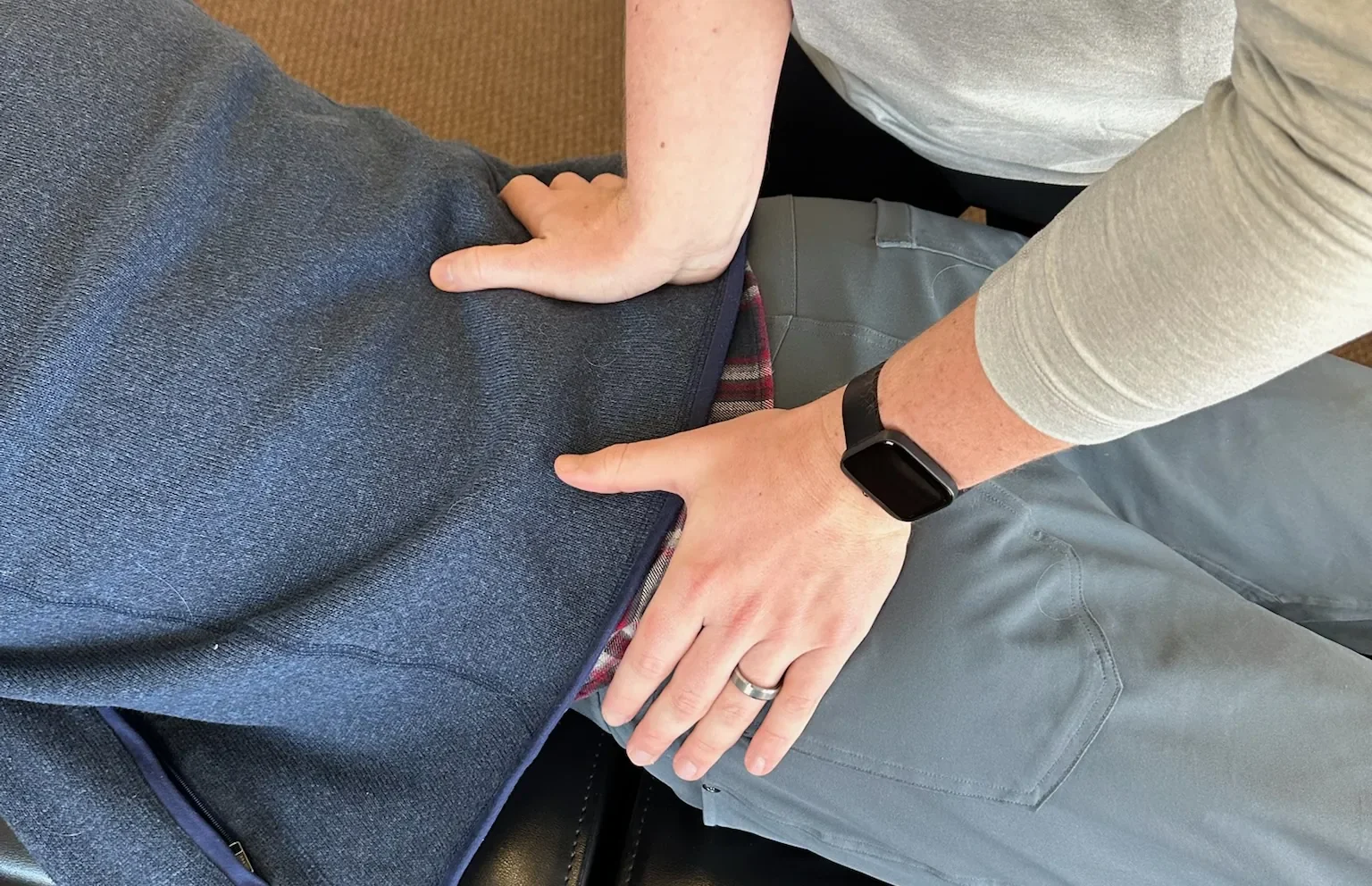
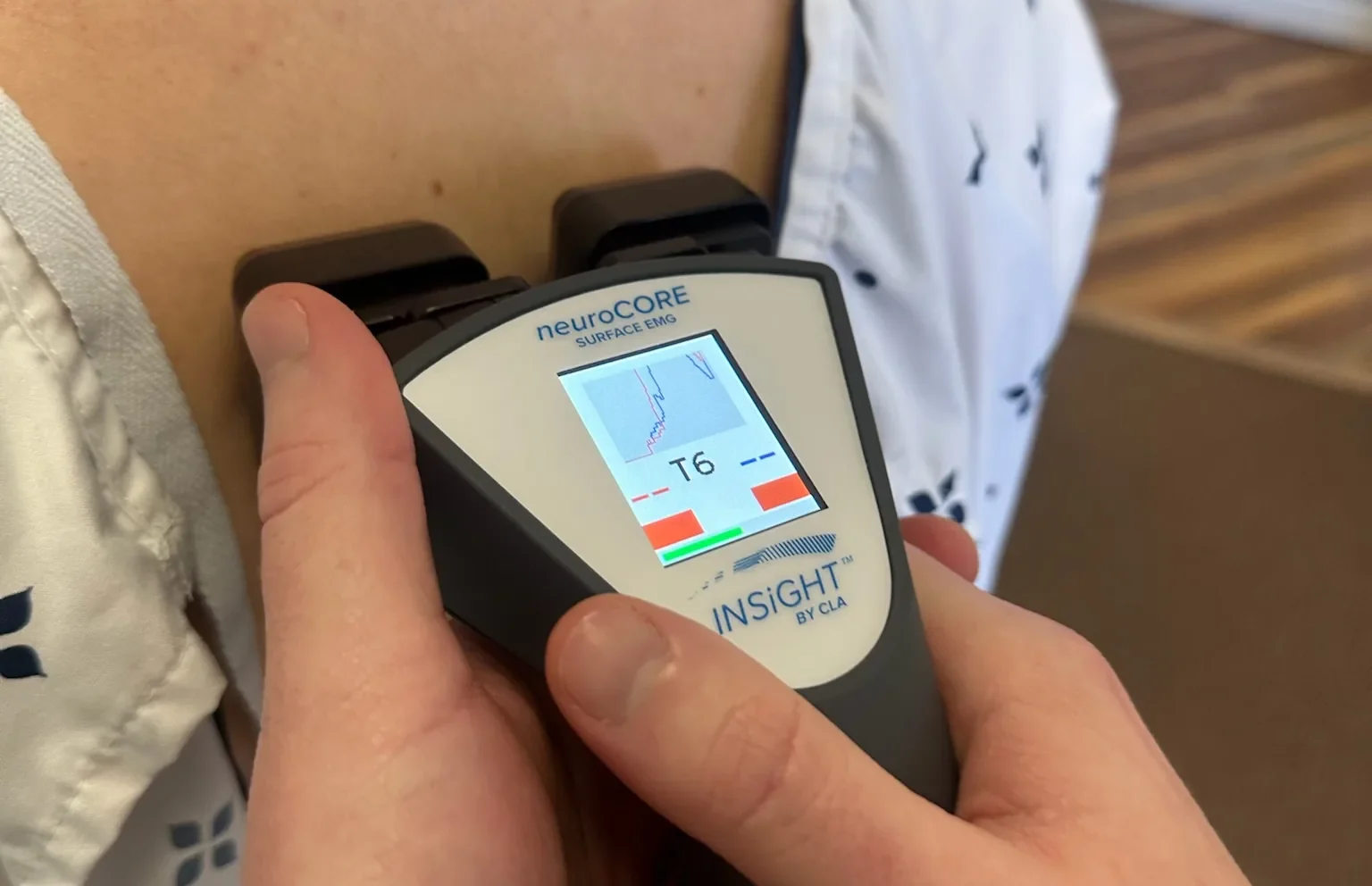
At our chiropractic office in Colleyville, the first step is finding where the irritation is coming from. Posture and movement testing shows how your lower back, pelvis and hips move, and a CLA INSiGHT nerve scan shows how much stress and muscle tension your nervous system is carrying along the spine. That gives us a starting point based on what is actually happening, not just on where it hurts.
What Sciatica Feels Like
Sciatica usually feels like pain running from the lower back or buttock down the back of one leg, anywhere from a dull ache to a sharp, burning line or an electric jolt. Mayo Clinic describes that range and notes that it is often worse with coughing, sneezing or long periods of sitting.
- Pain that starts in the lower back or buttock and travels down the back of one leg
- Burning, shooting or electric-shock pain, sometimes reaching the foot and toes
- Pins and needles, tingling or numbness in the leg or foot
- Weakness in the leg or foot
- Pain that flares when you cough, sneeze, or sit for a long time
- Leg pain that is stronger than the back pain itself
Where the symptoms land can hint at which nerve root is involved. Spine-Health’s guide to sciatica symptoms by nerve root explains that an irritated L5 root tends to cause numbness over the big toe and second toe and trouble lifting the big toe or ankle, while S1, the classic form of sciatica, tends to cause pain in the back of the calf and side of the foot and trouble rising onto your toes. These are clues, not a diagnosis, but they are worth noting before your exam.
The NHS patient guide to sciatica notes that sciatica usually affects the bottom and the back of one leg, often including the foot and toes, and that any back pain is usually less severe than the leg pain. That detail matters. Many people wait because their back doesn’t hurt that much, while the leg symptoms quietly keep going.
Sitting matters too. Mayo Clinic notes that people who sit a lot or don’t move much are more likely to develop herniated disks than active people are. If your leg pain builds through the workday or during a long drive, and eases when you get up and walk, that pattern is worth sharing at your first appointment. If sitting is the main thing that sets you off, sitting-related back pain has its own causes and fixes.
The NHS says sciatica usually gets better in a few weeks to a few months, though it can last longer or come back. Cleveland Clinic gives a similar picture, noting that it often doesn’t last longer than six weeks. That is encouraging, but it doesn’t mean you have to just wait it out. Knowing what is driving the pain helps you understand which movements help, which ones to ease off on, and whether imaging or a medical opinion makes sense.
Why Sciatica Flares Up and Keeps Coming Back
A disk or bone spur is usually the underlying cause, but daily habits often decide how much it bothers you. Mayo Clinic lists several risk factors that families here will recognize: jobs that involve twisting, heavy lifting or long periods of driving, extra body weight that adds stress to the spine, prolonged sitting, and diabetes, which raises the risk of nerve damage.
That is also why sciatica can come back. The NHS notes that it can return even after it gets better. When the pain settles but the same habits continue, the lower back keeps taking the same load, and a long week of sitting or one awkward lift can bring the leg pain right back.
- Long stretches of sitting at a desk, on the couch or in the car without getting up
- Lifting kids, car seats or groceries with a twist instead of a straight lift
- Frequent bending through the day without a break
- Staying in bed or on the couch for too long once pain starts
The NHS advises keeping up your normal activities as much as you can, starting gentle exercise as soon as you can, and not sitting or lying down for long periods. Their guidance notes that moving, even when it is uncomfortable, is not harmful and can help you recover sooner. Rest has its place on a bad day, but long stretches of it tend to leave the back and hips stiffer.
Cleveland Clinic’s prevention advice is plain and practical: sit, stand, lift and sleep in ways that support your back, and remember that heavy lifting, frequent bending or sitting for long periods can strain your lower back. A Harvard Health article on sitting and back pain suggests getting up at least every 30 minutes if you work at a desk. Small, repeatable habits like these are often what keeps sciatica from coming back.
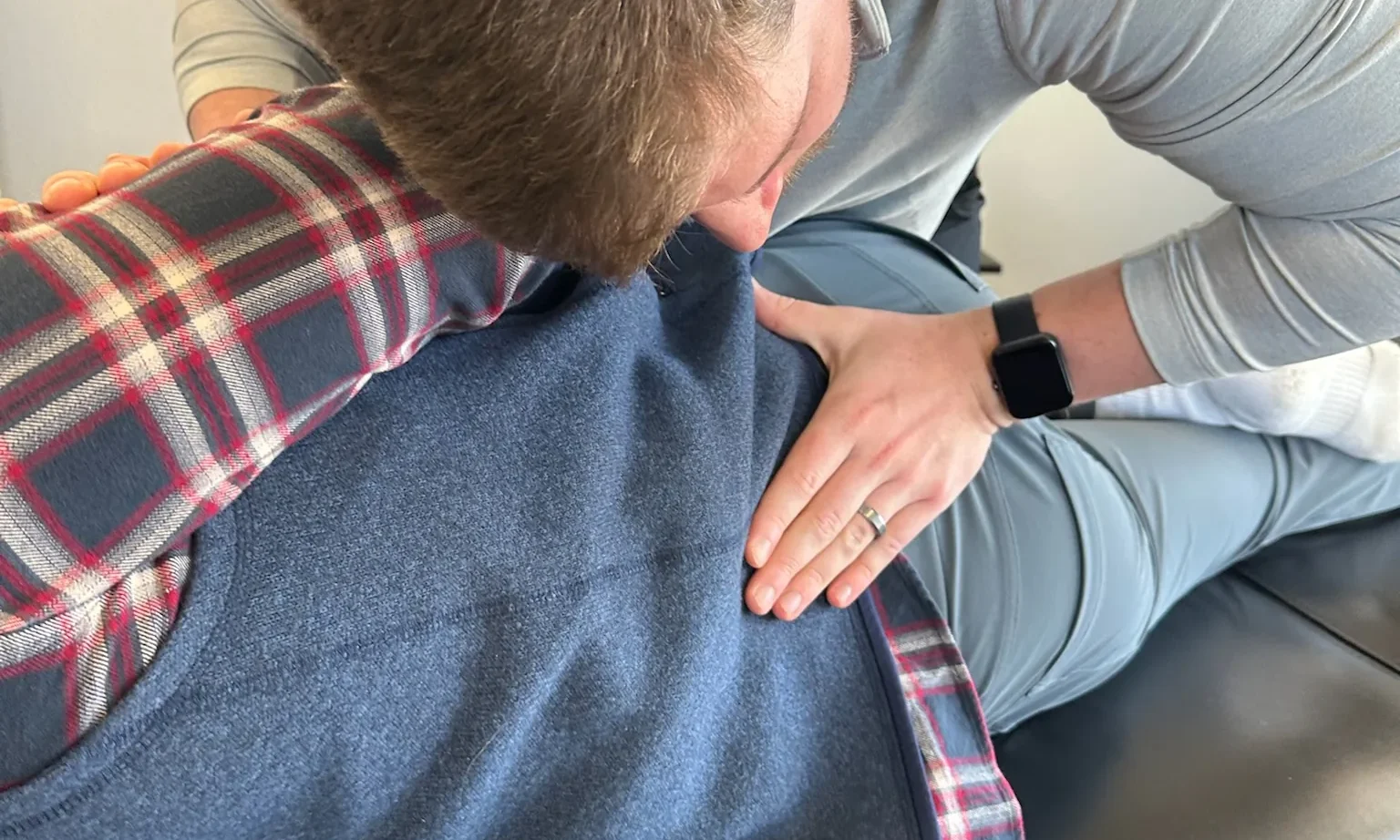
In our office, a care plan for sciatica is built around what your exam and CLA INSiGHT scan show. That usually includes chiropractic adjustments focused on how your lower back and pelvis are moving, plus simple habits you can repeat at home between visits. We are also clear about what falls outside chiropractic care, and we refer out when your symptoms point somewhere else. You can also watch a short sciatica video from our office. Our Precinct Line Road office is a short drive for Southlake families and for anyone looking for a family chiropractor near North Richland Hills.
When Sciatica Needs Medical Attention
Most sciatica is not an emergency, but a few signs mean you should get medical care right away instead of waiting for a chiropractic visit. Mayo Clinic and the NHS point to the same warning signs:
- Sudden numbness or muscle weakness in a leg
- Pain that starts after a serious injury, such as a car accident
- Sciatica in both legs
- Numbness around the genitals or bottom
- New trouble starting to urinate, or controlling your bladder or bowels
These can be signs of a serious spinal problem that needs urgent hospital care, so go to an emergency room or call 911, and don’t drive yourself. For everyday sciatica, Mayo Clinic suggests contacting a healthcare professional if self-care doesn’t ease your symptoms, or if the pain lasts longer than a week, is severe or keeps getting worse. The NHS also recommends getting checked if the pain is stopping you from doing your normal activities.
Frequently Asked Questions
How long does sciatica usually last?
Many cases improve within a few weeks. Cleveland Clinic notes that sciatica often doesn’t last longer than six weeks, and the NHS says it can take a few weeks to a few months. It can also come back. If your pain isn’t improving after a week of self-care, or it is getting worse, it’s worth having it looked at.
Is it better to rest or keep moving with sciatica?
For most people, gentle movement helps more than bed rest. The NHS advises staying as active as you can and avoiding long periods of sitting or lying down. Short walks and gentle stretches are a good place to start. If a movement makes your leg symptoms sharply worse, ease off and get it checked.
How do I know if my leg pain is really sciatica?
Sciatica usually starts in the lower back or buttock and travels down the back of one leg, often below the knee, sometimes with burning, tingling or numbness in the foot. It typically affects one side, and the leg pain is often worse than the back pain. Pain that stays in one spot, like the calf or hip, may be something else. An exam helps sort out where it is really coming from.
Can a chiropractor help with sciatica?
A chiropractor can evaluate how your lower back, pelvis and hips are moving and look for where the nerve irritation may be coming from. At Radiant Chiropractic, that evaluation includes a CLA INSiGHT scan. Care is built around what we find, and if your symptoms point to something that needs imaging or a medical specialist, we will tell you and refer you.
What is the difference between sciatica and a pinched nerve?
Sciatica is one type of pinched or irritated nerve. It refers specifically to the nerve roots in the lower back that form the sciatic nerve, which is why the pain travels down the leg. A pinched nerve can happen anywhere along the spine, and pinched nerves in the neck send symptoms into the arm instead of the leg.
Why does my sciatica keep coming back?
The NHS notes that sciatica can come back even after it gets better. Pain easing doesn’t always mean the things that set it off have changed. Long hours of sitting, lifting with a twist and not staying active can keep loading the lower back. Cleveland Clinic recommends sitting, standing, lifting and sleeping in ways that support your back, and working on those habits is a big part of our care plans.

Schedule Now
Looking for a family chiropractor in Colleyville, TX? At Radiant Chiropractic, every care plan starts with a real assessment, not a guess. Schedule your first visit and see what’s actually going on.
What Colleyville Families Are Saying
Real feedback from the families we’ve had the privilege to care for


 Trustindex verifies that the original source of the review is Google.
 Trustindex verifies that the original source of the review is Google.

 Trustindex verifies that the original source of the review is Google.
 Trustindex verifies that the original source of the review is Google.
 Trustindex verifies that the original source of the review is Google.
 Trustindex verifies that the original source of the review is Google.
 Trustindex verifies that the original source of the review is Google.
 Trustindex verifies that the original source of the review is Google.

 Trustindex verifies that the original source of the review is Google.
 Trustindex verifies that the original source of the review is Google.
Visit Our Office
Contact us for expert chiropractic care in Colleyville, TX.
PHONE - Call or Text 📱
HOURS
Monday: 9:00am–1:00pm, 4:00pm–7:00pm
Tuesday: 4:00pm–7:00pm
Wednesday: 9:00am–1:00pm, 4:00pm–7:00pm
Thursday: 9:00am–1:00pm, 4:00pm–7:00pm
Friday: Closed
Saturday: Closed
Sunday: Closed